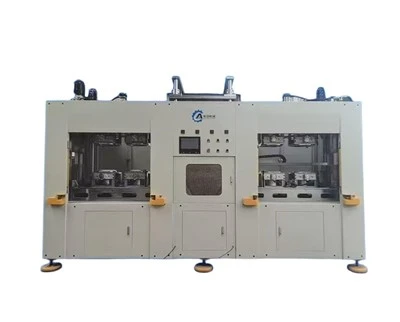
Hey there! As a welding molds supplier, I've been in the thick of it when it comes to the nitty - gritty of welding. One question that comes up a lot is: What are the requirements for the weld fusion when using welding molds? Let's dig into that.
Understanding Weld Fusion
First off, weld fusion is the magical moment when two pieces of metal or plastic (depending on what you're welding) come together and form a single, strong bond. It's not just about sticking them adjacent; it's about getting them to meld on a molecular level. When using welding molds, achieving the right weld fusion is crucial for the quality and durability of the final product.
Material Compatibility
The first thing you've got to think about is the compatibility of the materials you're welding. Welding molds can be used for all sorts of materials, but every material has its quirks. For instance, different types of plastics have different melting points, and metals can vary widely in terms of their chemical composition. If you're trying to weld two materials that don't play well together, you're going to have a tough time getting proper fusion.
When we talk about plastics, some are amorphous, like ABS and polycarbonate, and others are semi - crystalline, such as polyethylene and polypropylene. Amorphous plastics tend to have a wider melting range, which can make them a bit more forgiving during the welding process. Semi - crystalline plastics, on the other hand, have a very distinct melting point, so you've got to hit that sweet spot just right. As a welding molds supplier, we make sure to work with our clients to understand the materials they're using so that we can design molds that are optimized for those specific materials.
For metals, it's a different ballgame. Things like the carbon content, alloying elements, and the heat - treatment history of the metal can all influence how well it fuses during welding. Some metals, like aluminum, are notorious for forming oxide layers on their surface, which can prevent proper fusion. In these cases, you might need to use techniques like pre - cleaning or special welding gases to ensure a good bond.
Mold Design
The design of the welding mold is another make - or - break factor for weld fusion. A well - designed mold will hold the pieces in the right position, apply the right amount of pressure, and distribute heat evenly (if heat is involved in the welding process).
When it comes to the shape and size of the mold cavities, they need to be a perfect fit for the parts being welded. If the mold is too loose, the parts might move around during welding, resulting in an uneven or weak weld. If it's too tight, it could cause distortion or damage to the parts.
In addition, the mold should have proper vents to allow any gases or air to escape during the welding process. If the gases are trapped, they can create bubbles or voids in the weld, which seriously compromise its strength.
As a welding molds supplier, we use advanced CAD and CAM software to design molds that are tailored to our clients' specific needs. We take into account factors like the part geometry, the welding method, and the material properties to create molds that will give the best possible weld fusion.
Different Welding Methods and Their Fusion Requirements
Ultrasonic Welding
Ultrasonic welding is a popular choice for joining plastics. It uses high - frequency vibrations to generate heat at the interface of the two parts, which then melts the plastic and creates a bond. When using Ultrasonic Welding Horns in the molds for this process, there are several requirements for good weld fusion.
The amplitude of the ultrasonic vibrations is crucial. If the amplitude is too low, there won't be enough heat generated to melt the plastic, and the parts won't fuse properly. On the other hand, if it's too high, it can cause excessive melting, which might lead to flash or damage to the parts.
The welding time also needs to be just right. Too short, and the plastic won't have enough time to melt and flow together. Too long, and you could end up overheating the plastic, which can change its properties and weaken the weld.
The pressure applied during ultrasonic welding is another important factor. The pressure helps to keep the parts in contact and promotes the flow of the molten plastic. We always work with our clients to determine the optimal pressure settings for their specific application.
Hot Plate Welding
Hot plate welding is often used for larger plastic parts or for materials that require more heat to melt. When using Hot Plate Welding Molds, achieving proper weld fusion means getting the temperature of the hot plate just right.
The hot plate needs to be heated to a temperature that is high enough to melt the material but not so high that it causes degradation or charring. The temperature also needs to be uniform across the surface of the hot plate to ensure an even weld.
The dwell time, which is the time the parts are in contact with the hot plate, is critical. If the dwell time is too short, the material won't melt completely, and if it's too long, the material at the interface might start to break down.
Once the parts are melted, the speed at which they are brought together and the pressure applied during the joining process are also important. A slow approach speed can allow the melted material to cool too much, while too much pressure can cause the material to squeeze out and form flash.


Non - Standard Welding Molds
Sometimes, our clients come to us with unique welding requirements that call for Non Standard Welding Molds. These molds are designed to meet very specific needs, such as welding irregularly shaped parts or using unconventional materials.
For non - standard welding molds, achieving weld fusion can be more challenging because there might not be a one - size - fits - all approach. We work closely with our clients to understand their application in detail. We conduct tests and simulations to determine the best welding parameters, such as temperature, pressure, and time.
The materials used to make the non - standard molds are also carefully selected. They need to be able to withstand the forces and temperatures involved in the welding process without deforming or wearing out too quickly.
Quality Control and Testing
Even if you've got the right materials, a well - designed mold, and the optimal welding parameters, it's still important to have a good quality control system in place. This helps to ensure that the weld fusion meets the required standards.
One common test is a visual inspection. This involves looking at the weld for any obvious defects, such as cracks, voids, or unevenness. However, visual inspection might not always catch internal defects.
For more in - depth testing, we might use techniques like ultrasonic testing or X - ray inspection. Ultrasonic testing can detect flaws inside the weld by sending high - frequency sound waves through it. X - ray inspection can provide a detailed view of the internal structure of the weld, allowing us to spot any hidden defects.
Conclusion and Call to Action
In conclusion, achieving proper weld fusion when using welding molds requires a combination of factors, including material compatibility, proper mold design, and the right welding parameters for the specific method being used. Whether you're using ultrasonic welding, hot plate welding, or need a non - standard solution, we're here to help.
As a welding molds supplier, we've got the expertise and experience to design and manufacture high - quality molds that will give you the best possible weld fusion. If you're in the market for welding molds or have any questions about weld fusion, don't hesitate to reach out. We'd be happy to discuss your specific needs and figure out the best solution for you.
References
- Joining Plastics: A Practical Guide to Welding and Bonding, John Atkinson
- Welding Metallurgy, John C. Lippold and David J. Kotecki