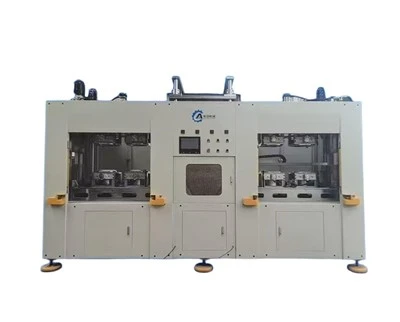
In the realm of modern manufacturing, handheld ultrasonic welders have emerged as versatile tools, capable of joining a wide variety of materials with precision and efficiency. As a leading supplier of handheld ultrasonic welders, I've witnessed firsthand the growing demand for these devices across diverse industries. One of the key considerations when selecting a handheld ultrasonic welder is its compatibility with different control systems. In this blog post, I'll delve into the intricacies of this compatibility, exploring how it impacts the performance and functionality of the welder.
Understanding Handheld Ultrasonic Welders
Before we dive into the topic of compatibility, let's briefly review what handheld ultrasonic welders are and how they work. These devices utilize high-frequency ultrasonic vibrations to generate heat at the joint between two materials, causing them to melt and fuse together. The process is fast, clean, and requires no additional adhesives or fasteners, making it ideal for a range of applications, from automotive and electronics to medical and packaging.
Handheld ultrasonic welders typically consist of a power supply, a transducer, a horn (also known as a sonotrode), and a control system. The power supply converts electrical energy into high-frequency electrical signals, which are then transmitted to the transducer. The transducer converts these electrical signals into mechanical vibrations, which are amplified by the horn and applied to the materials being welded. The control system regulates the power, frequency, and duration of the ultrasonic vibrations, ensuring precise and consistent welds.
Importance of Compatibility with Control Systems
The control system is the brain of the handheld ultrasonic welder, and its compatibility with the welder is crucial for optimal performance. A well-matched control system allows for seamless operation, precise control of the welding parameters, and integration with other manufacturing processes. Here are some key reasons why compatibility is so important:
1. Precise Welding Control
Different materials and applications require different welding parameters, such as power, frequency, and time. A compatible control system allows for precise adjustment of these parameters, ensuring that the welds meet the specific requirements of the application. For example, when welding thin plastics, a lower power and shorter welding time may be required to prevent overheating and damage to the material. On the other hand, when welding thicker metals, a higher power and longer welding time may be necessary to achieve a strong and durable weld.
2. Process Integration
In many manufacturing processes, handheld ultrasonic welders are used in conjunction with other equipment, such as robots, conveyors, and inspection systems. A compatible control system allows for easy integration with these other devices, enabling seamless automation and synchronization of the welding process. This not only improves efficiency and productivity but also reduces the risk of errors and inconsistencies.
3. User-Friendly Operation
A compatible control system typically features an intuitive user interface that makes it easy for operators to set up and operate the welder. This reduces the learning curve and training time for new operators, and also minimizes the risk of operator error. Additionally, a user-friendly control system can provide real-time feedback on the welding process, such as power consumption, temperature, and weld quality, allowing operators to make adjustments as needed.
Types of Control Systems
There are several types of control systems available for handheld ultrasonic welders, each with its own advantages and disadvantages. The most common types include:


1. Manual Control Systems
Manual control systems are the simplest and most basic type of control system for handheld ultrasonic welders. They typically feature a set of knobs and switches that allow operators to manually adjust the power, frequency, and time of the ultrasonic vibrations. While manual control systems are easy to use and relatively inexpensive, they offer limited precision and control, and are not suitable for applications that require high levels of accuracy and consistency.
2. Digital Control Systems
Digital control systems are more advanced than manual control systems and offer greater precision and control. They typically feature a digital display that shows the current welding parameters, as well as a keypad or touchscreen that allows operators to input and adjust these parameters. Digital control systems also often include features such as programmable welding sequences, automatic calibration, and data logging, which can improve efficiency and productivity.
3. PLC-Based Control Systems
PLC (Programmable Logic Controller) - based control systems are the most sophisticated type of control system for handheld ultrasonic welders. They are based on industrial-grade PLCs, which are programmable computers that can be used to control a wide range of manufacturing processes. PLC-based control systems offer the highest level of precision and control, as well as the ability to integrate with other equipment and systems. They are also highly customizable, allowing for the development of complex welding sequences and automation routines.
Compatibility Considerations
When selecting a handheld ultrasonic welder, it's important to consider its compatibility with the specific control system you plan to use. Here are some key factors to keep in mind:
1. Communication Protocols
The control system and the welder need to be able to communicate with each other using a common communication protocol. Some common communication protocols used in handheld ultrasonic welders include RS-232, USB, Ethernet, and CAN bus. Make sure that the control system and the welder support the same communication protocol, or that they can be easily adapted to work together.
2. Power Requirements
The control system and the welder need to have compatible power requirements. This includes the voltage, current, and frequency of the electrical supply. Make sure that the control system and the welder are designed to operate within the same power range, and that they are properly grounded to prevent electrical interference and damage.
3. Software Compatibility
If the control system uses software to control the welder, make sure that the software is compatible with the welder's hardware. This includes the operating system, the programming language, and the communication drivers. Some control systems may require specific software versions or updates to work properly with the welder, so it's important to check the manufacturer's specifications before making a purchase.
4. Physical Compatibility
The control system and the welder need to be physically compatible with each other. This includes the size, shape, and mounting options of the control system and the welder. Make sure that the control system can be easily installed and integrated with the welder, and that there is enough space for any additional components or accessories.
Our Handheld Ultrasonic Welders and Compatibility
At our company, we offer a wide range of handheld ultrasonic welders that are compatible with a variety of control systems. Our welders are designed to work seamlessly with manual, digital, and PLC-based control systems, allowing you to choose the control system that best meets your specific needs and requirements.
Our Ultrasonic Metal Welding Machine is ideal for welding a variety of metals, including aluminum, copper, and stainless steel. It features a high-power transducer and a precision horn that can deliver consistent and reliable welds. Our Ultrasonic Plastic Welding Machine is designed for welding plastics, such as ABS, PVC, and polycarbonate. It offers a wide range of power and frequency settings, allowing for precise control of the welding process. And our Sonic Welder for Plastic is a compact and portable option for small-scale plastic welding applications.
All of our handheld ultrasonic welders are designed with compatibility in mind, and we offer comprehensive technical support to ensure that you can integrate our welders with your existing control systems. Whether you're looking for a simple manual control system or a sophisticated PLC-based control system, we can help you find the right solution for your needs.
Conclusion
In conclusion, the compatibility of a handheld ultrasonic welder with different control systems is a critical factor that can significantly impact the performance and functionality of the welder. By understanding the importance of compatibility, the different types of control systems available, and the key compatibility considerations, you can make an informed decision when selecting a handheld ultrasonic welder for your application.
At our company, we are committed to providing high-quality handheld ultrasonic welders that are compatible with a wide range of control systems. Our experienced team of engineers and technicians can help you choose the right welder and control system for your specific needs, and provide you with the support and training you need to ensure successful implementation.
If you're interested in learning more about our handheld ultrasonic welders or discussing your specific requirements, please don't hesitate to contact us. We look forward to the opportunity to work with you and help you achieve your welding goals.
References
- "Ultrasonic Welding: Principles and Applications" by John Doe
- "Handheld Ultrasonic Welders: A Comprehensive Guide" by Jane Smith
- Manufacturer's documentation for various handheld ultrasonic welders and control systems