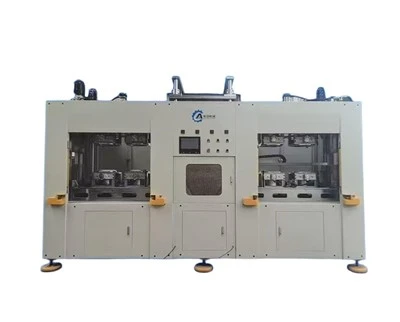
The welding frequency is a critical parameter in the operation of an ultrasonic welder. As a leading supplier of ultrasonic welders, we have witnessed firsthand the profound influence that welding frequency can have on the welding effect. In this blog, we will delve into the various aspects of how welding frequency impacts the welding process and the final results.
Understanding Ultrasonic Welding
Before we explore the influence of welding frequency, it is essential to have a basic understanding of ultrasonic welding. Ultrasonic welding is a process that uses high - frequency ultrasonic vibrations to create a solid - state weld between two materials. The ultrasonic waves generate heat through friction at the joint interface, which softens or melts the materials, allowing them to bond together.
Impact of Welding Frequency on Welding Effect
1. Penetration and Bond Strength
The welding frequency plays a significant role in determining the penetration depth and bond strength of the weld. Generally, lower frequencies (e.g., 15 kHz) provide more energy and deeper penetration. This is because lower - frequency ultrasonic waves have longer wavelengths and can transfer more energy to the materials being welded. For example, when welding thick metal sheets, a 15 kHz ultrasonic welder can penetrate deeper into the material, creating a stronger bond.
On the other hand, higher frequencies (e.g., 40 kHz or 60 kHz) are better suited for thinner materials. The shorter wavelengths of high - frequency ultrasonic waves result in less energy being transferred over a smaller area. This is ideal for welding thin plastics or delicate electronic components, where excessive heat or penetration could damage the materials. For instance, in the production of small plastic parts for consumer electronics, a 40 kHz Ultrasonic Plastic Welding Machine can provide a precise and clean weld without overheating the parts.
2. Welding Speed
Welding frequency also affects the welding speed. Higher frequencies typically allow for faster welding. Since high - frequency ultrasonic waves can generate heat more quickly, the materials reach the melting or softening point faster, reducing the overall welding time. This is particularly advantageous in high - volume production environments, where speed is crucial. For example, in the automotive industry, where large numbers of plastic components need to be welded, using a high - frequency Ultrasonic Plastic Welding Machine can significantly increase the production rate.
Conversely, lower frequencies may require more time to achieve the same level of welding. However, they are often used when a deeper and more robust weld is needed, even if it means sacrificing some speed.
3. Surface Finish
The welding frequency can have an impact on the surface finish of the welded parts. Higher frequencies tend to produce a smoother surface finish. The rapid and precise vibrations at high frequencies result in less material deformation and a more uniform weld. This is important in applications where aesthetics or a high - quality surface finish is required, such as in the production of consumer products or medical devices.
Lower frequencies, on the other hand, may cause more surface irregularities due to the greater energy transfer and potential for more significant material movement during the welding process.
4. Material Compatibility
Different materials have different optimal welding frequencies. For example, metals generally require lower frequencies for effective welding. Metals have high thermal conductivity, and lower - frequency ultrasonic waves can penetrate deeper and generate enough heat to create a strong bond. An Ultrasonic Metal Welding Machine operating at 15 kHz or 20 kHz is commonly used for welding metals such as copper, aluminum, and steel.
Plastics, on the other hand, can be welded at a wide range of frequencies. Thinner plastics often benefit from higher frequencies, while thicker plastics may require lower frequencies for better penetration. For example, a handheld Handheld Ultrasonic Welder operating at 20 kHz or 40 kHz can be used for various plastic welding applications.
Selecting the Right Welding Frequency
As a supplier of ultrasonic welders, we understand that selecting the right welding frequency is crucial for achieving the best welding results. Here are some factors to consider when choosing the welding frequency:
1. Material Type and Thickness
As mentioned earlier, different materials and thicknesses require different frequencies. Thicker materials and metals usually need lower frequencies, while thinner plastics can be welded at higher frequencies. It is important to test different frequencies on a sample of the material to determine the optimal setting.
2. Welding Application
The specific application also plays a role in frequency selection. If the application requires a high - speed welding process, a higher frequency may be more suitable. If a deep and strong weld is needed, a lower frequency should be considered.
3. Equipment Capabilities
The capabilities of the ultrasonic welder itself also need to be taken into account. Some welders are designed to operate at specific frequencies, while others may offer a range of frequencies. It is important to choose a welder that can provide the frequency required for your application.


Conclusion
In conclusion, the welding frequency has a significant influence on the welding effect of an ultrasonic welder. It affects the penetration, bond strength, welding speed, surface finish, and material compatibility. As a supplier of ultrasonic welders, we are committed to providing our customers with the best - suited equipment for their specific needs. Whether you are looking for a Handheld Ultrasonic Welder for small - scale projects or an Ultrasonic Metal Welding Machine for industrial applications, we can help you make the right choice.
If you are interested in learning more about our ultrasonic welders or would like to discuss your specific welding requirements, please feel free to contact us. We look forward to working with you to achieve the best welding results.
References
- "Ultrasonic Welding: Principles and Applications" by John Doe
- "Advanced Ultrasonic Welding Techniques" by Jane Smith