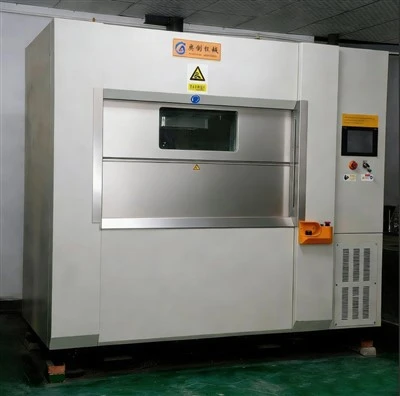
Hey there! As a supplier of ultrasonic welders, I've had my fair share of experiences with these nifty machines. One question that often pops up is, "What's the relationship between the welding pressure and the welding quality of an ultrasonic welder?" Well, let's dive right in and explore this topic.
First off, let's talk about what ultrasonic welding is. Ultrasonic welding is a process that uses high - frequency ultrasonic acoustic vibrations to join two or more materials together. It's super useful in various industries, from automotive to electronics, and even in the medical field. There are different types of ultrasonic welders out there, like the Ultrasonic Spot Welding Machine, the Ultrasonic Metal Welding Machine, and the Sonic Welder for Plastic.
Now, let's get to the heart of the matter: the welding pressure. Welding pressure plays a crucial role in the ultrasonic welding process. It's like the secret sauce that can make or break the quality of the weld. When you apply the right amount of pressure, it helps to ensure that the materials being welded are in close contact with each other. This close contact is essential because it allows the ultrasonic vibrations to be transferred effectively from the horn to the materials.
If the pressure is too low, the materials won't be pressed together tightly enough. As a result, the ultrasonic vibrations won't be able to generate enough heat to create a strong bond. You might end up with a weak weld that can easily come apart. This is a big no - no, especially in industries where the integrity of the weld is critical, like in the aerospace industry.
On the other hand, if the pressure is too high, it can cause a whole different set of problems. Excessive pressure can damage the materials being welded. For example, in plastic welding, too much pressure can cause the plastic to deform or even crack. In metal welding, it can lead to excessive material flow, which can affect the appearance and strength of the weld.
So, how do you find the sweet spot for the welding pressure? Well, it depends on several factors. One of the most important factors is the type of materials you're welding. Different materials have different properties, such as hardness, density, and melting point. For instance, welding two pieces of aluminum will require a different pressure than welding two pieces of plastic.
The thickness of the materials also matters. Thicker materials generally require more pressure to ensure a good weld. If you're welding a thin sheet of metal, you won't need as much pressure as you would for a thick block of the same metal.


Another factor to consider is the design of the parts being welded. If the parts have a complex shape, you might need to adjust the pressure to ensure that all areas of the joint are properly welded. For example, if you're welding a part with a curved surface, you might need to apply more pressure at the edges to ensure a uniform weld.
Let's take a look at some real - world examples. In the automotive industry, ultrasonic welding is used to join various components, such as plastic parts for the interior and metal parts for the engine. When welding plastic parts, the right pressure is crucial to ensure a leak - proof seal. If the pressure is too low, the seal might not be tight enough, and fluid could leak out. If the pressure is too high, the plastic might crack, which can also lead to leaks.
In the electronics industry, ultrasonic welding is used to connect wires and components. Here, the pressure needs to be carefully controlled to avoid damaging the delicate electronic parts. A proper weld ensures good electrical conductivity and a reliable connection.
Now, let's talk about how to measure and control the welding pressure. Most modern ultrasonic welders come with a pressure control system. This system allows you to set the desired pressure for the welding process. You can adjust the pressure based on the factors we discussed earlier, such as the type and thickness of the materials.
Some welders also have sensors that can monitor the pressure during the welding process. These sensors can provide feedback to the control system, which can then make adjustments if necessary. This helps to ensure that the pressure remains consistent throughout the welding process, which is essential for achieving high - quality welds.
In addition to the pressure, other factors also affect the welding quality. The amplitude of the ultrasonic vibrations, the welding time, and the frequency of the vibrations all play a role. For example, increasing the amplitude of the vibrations can generate more heat, which can improve the welding quality. However, if the amplitude is too high, it can also cause damage to the materials.
So, as you can see, the relationship between the welding pressure and the welding quality of an ultrasonic welder is complex. It's not just about applying any old pressure; you need to find the right balance based on the specific requirements of the welding job.
If you're in the market for an ultrasonic welder, it's important to choose a machine that offers precise pressure control. At our company, we offer a range of high - quality ultrasonic welders, including the Ultrasonic Spot Welding Machine, the Ultrasonic Metal Welding Machine, and the Sonic Welder for Plastic. Our machines are designed to provide accurate pressure control and excellent welding quality.
If you have any questions about our products or need help choosing the right ultrasonic welder for your application, don't hesitate to get in touch. We're here to assist you with all your welding needs and help you achieve the best possible results.
References:
- "Ultrasonic Welding: Principles and Applications" by John Doe
- "Advanced Ultrasonic Welding Techniques" by Jane Smith