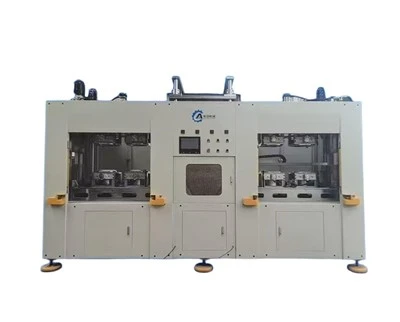
As a supplier of Non Standard Welding Molds, I understand the critical importance of ensuring the safety of these molds in high - temperature environments. High - temperature conditions can pose significant challenges to the integrity and performance of welding molds, potentially leading to safety hazards, reduced efficiency, and increased costs. In this blog, I will share some key strategies and best practices to ensure the safety of non - standard welding molds in high - temperature settings.
Understanding the Challenges of High - Temperature Environments
High - temperature environments can have several detrimental effects on non - standard welding molds. First, thermal expansion is a major concern. As the temperature rises, the materials of the mold expand. If the expansion is not properly accounted for, it can lead to dimensional changes in the mold, affecting the quality of the welds and potentially causing the mold to bind or even break.
Second, high temperatures can accelerate the wear and tear of the mold materials. The heat can cause the surface of the mold to oxidize, reducing its hardness and increasing the risk of abrasion. This not only shortens the lifespan of the mold but also affects the precision of the welding process.
Third, the high - temperature environment may also pose risks to the operators. If the mold is not properly insulated or cooled, it can cause burns or other heat - related injuries.
Material Selection
One of the first steps in ensuring the safety of non - standard welding molds in high - temperature environments is the proper selection of materials. The materials used for the mold should have high heat resistance, good thermal conductivity, and low thermal expansion coefficients.


For example, some high - performance alloys such as Inconel or Hastelloy can be excellent choices. These alloys have high melting points and can maintain their mechanical properties at elevated temperatures. They also have good corrosion resistance, which is important in environments where there may be exposure to corrosive substances.
Another option is to use ceramic materials. Ceramics have extremely high heat resistance and low thermal expansion. They are also chemically inert, which means they are less likely to react with the welding materials or the surrounding environment. However, ceramics are brittle and may require special handling and design considerations.
Design Considerations
The design of non - standard welding molds plays a crucial role in ensuring their safety in high - temperature environments. First, the mold should be designed with proper thermal expansion allowances. This can be achieved by incorporating expansion joints or by using a modular design that allows for some flexibility in the mold structure.
Second, the design should include effective cooling channels. Cooling is essential to maintain the temperature of the mold within a safe range. The cooling channels should be designed to provide uniform cooling throughout the mold. This can be achieved by using a combination of internal and external cooling methods. For example, internal cooling channels can be drilled into the mold, and external cooling can be provided by fans or water jackets.
Third, the mold should be designed with safety features such as insulation. Insulation can help to reduce the heat transfer from the mold to the surrounding environment, protecting the operators and other equipment. It can also help to maintain the temperature of the mold more effectively.
Cooling Systems
Implementing an efficient cooling system is vital for the safety of non - standard welding molds in high - temperature environments. There are several types of cooling systems that can be used, including water - cooled, air - cooled, and refrigerant - cooled systems.
Water - cooled systems are one of the most common types of cooling systems for welding molds. They are effective in removing heat from the mold quickly and efficiently. Water - cooled systems typically consist of a pump, a heat exchanger, and a series of cooling channels within the mold. The water is circulated through the cooling channels, absorbing heat from the mold, and then the heated water is passed through the heat exchanger to release the heat.
Air - cooled systems are simpler and more cost - effective than water - cooled systems. They use fans to blow air over the surface of the mold, removing heat through convection. However, air - cooled systems are generally less efficient than water - cooled systems, especially in high - temperature environments.
Refrigerant - cooled systems are the most efficient type of cooling systems. They use a refrigerant to absorb heat from the mold and then release the heat through a condenser. Refrigerant - cooled systems are often used in applications where very precise temperature control is required.
Monitoring and Maintenance
Regular monitoring and maintenance are essential to ensure the safety of non - standard welding molds in high - temperature environments. Monitoring the temperature of the mold is crucial. This can be done using temperature sensors placed at strategic locations within the mold. The temperature data can be used to adjust the cooling system and to detect any potential problems early.
In addition to temperature monitoring, the mold should also be inspected regularly for signs of wear, damage, or corrosion. Any damaged parts should be replaced immediately to prevent further problems. The cooling system should also be maintained regularly to ensure its proper functioning. This includes checking the water or refrigerant levels, cleaning the heat exchangers, and inspecting the pumps and valves.
Training and Safety Procedures
Proper training of the operators is essential for the safety of non - standard welding molds in high - temperature environments. The operators should be trained on the proper use and maintenance of the molds, as well as the safety procedures in case of an emergency.
The training should include information on how to handle the molds safely, how to operate the cooling systems, and how to recognize the signs of potential problems. In addition, safety procedures such as wearing appropriate personal protective equipment (PPE) should be strictly enforced.
Conclusion
Ensuring the safety of non - standard welding molds in high - temperature environments is a complex but essential task. By carefully selecting the materials, designing the mold with proper safety features, implementing an efficient cooling system, and conducting regular monitoring and maintenance, we can minimize the risks and ensure the reliable performance of the molds.
As a supplier of Non Standard Welding Molds, we are committed to providing high - quality molds that are safe and reliable in high - temperature environments. We also offer a range of other products such as Ultrasonic Welding Horns and Hot Plate Welding Molds. If you are interested in our products or have any questions about ensuring the safety of welding molds in high - temperature environments, please feel free to contact us for further discussion and potential procurement opportunities.
References
- "High - Temperature Materials and Their Applications" by Richard A. Rapp
- "Welding Technology Handbook" by John R. Davis
- "Thermal Management in Manufacturing Processes" by David S. Dandy