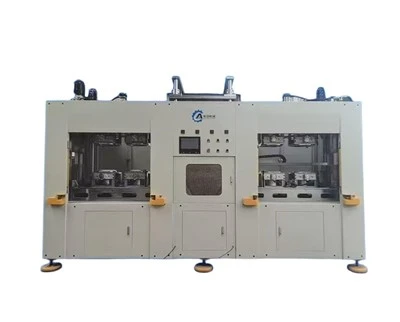
What is the maximum thickness of plastics that a Vibration Plastic Welder can weld?
As a supplier of Vibration Plastic Welders, I often encounter inquiries from customers regarding the maximum thickness of plastics that our machines can weld. This is a crucial question, as it directly impacts the scope of applications and the feasibility of various projects. In this blog post, I will delve into the factors that influence the welding thickness, the typical maximum thickness achievable, and how our Vibration Plastic Welder can meet your specific needs.


Factors Affecting Welding Thickness
Several factors play a significant role in determining the maximum thickness of plastics that a Vibration Plastic Welder can effectively weld. Understanding these factors is essential for optimizing the welding process and achieving high-quality welds.
1. Material Properties
Different plastics have varying melting points, viscosities, and flow characteristics. These properties directly affect the ease of welding and the maximum thickness that can be joined. For instance, thermoplastics with lower melting points and higher flow rates, such as polyethylene and polypropylene, are generally easier to weld and can be joined in thicker sections compared to plastics with higher melting points and lower flow rates, like polycarbonate and acrylonitrile butadiene styrene (ABS).
2. Vibration Amplitude and Frequency
The amplitude and frequency of the vibration generated by the welder are critical parameters that influence the welding process. Higher amplitudes and frequencies can generate more heat and energy, which is necessary for melting thicker plastic sections. However, excessive vibration can also cause damage to the plastic parts, such as cracking or deformation. Therefore, it is essential to optimize the vibration settings based on the material properties and the desired welding thickness.
3. Welding Pressure
Applying the right amount of pressure during the welding process is crucial for ensuring proper contact between the plastic parts and promoting the flow of molten plastic. Higher pressures can help to overcome the resistance of thicker plastic sections and ensure a strong bond. However, excessive pressure can also cause the plastic to flow out of the joint area, resulting in a weak weld. Therefore, it is important to adjust the welding pressure according to the material properties and the thickness of the plastic parts.
4. Welding Time
The duration of the welding process also affects the maximum thickness of plastics that can be welded. Longer welding times allow more heat to be transferred to the plastic parts, which is necessary for melting thicker sections. However, excessive welding times can also cause thermal degradation of the plastic, resulting in a reduction in the mechanical properties of the weld. Therefore, it is important to optimize the welding time based on the material properties and the desired welding thickness.
Typical Maximum Thickness Achievable
The maximum thickness of plastics that a Vibration Plastic Welder can weld depends on the specific model and configuration of the machine, as well as the factors mentioned above. In general, most Vibration Plastic Welders can weld plastics with a thickness ranging from a few millimeters to several centimeters.
For thinner plastic parts, typically up to 5 millimeters in thickness, our Vibration Plastic Welder can achieve high-quality welds with excellent strength and hermeticity. These welds are suitable for a wide range of applications, such as automotive components, electronic enclosures, and medical devices.
For thicker plastic parts, up to 20 millimeters or more in thickness, our Vibration Welding System is capable of providing the necessary heat and energy to melt and join the plastic sections. This system is designed for heavy-duty applications, such as large industrial parts, consumer goods, and transportation components.
It is important to note that the maximum thickness achievable may vary depending on the specific material and application requirements. Therefore, it is recommended to consult with our technical experts to determine the most suitable welding solution for your specific needs.
How Our Vibration Plastic Welder Can Meet Your Needs
At our company, we offer a wide range of Vibration Plastic Welders and Vibration Welding Systems that are designed to meet the diverse needs of our customers. Our machines are equipped with advanced features and technologies that ensure high-quality welds, excellent repeatability, and maximum productivity.
1. Precise Control
Our Vibration Plastic Welders are equipped with advanced control systems that allow for precise adjustment of the vibration amplitude, frequency, pressure, and welding time. This ensures that the welding process is optimized for the specific material and application requirements, resulting in high-quality welds with excellent strength and hermeticity.
2. High Power and Performance
Our Vibration Welding Systems are designed to provide high power and performance, making them suitable for welding thick plastic parts. These systems are equipped with powerful motors and advanced vibration generators that can generate the necessary heat and energy to melt and join the plastic sections.
3. Customizable Solutions
We understand that every customer has unique requirements, and we are committed to providing customized solutions that meet their specific needs. Our technical experts work closely with our customers to understand their requirements and develop tailored welding solutions that are optimized for their specific applications.
4. Excellent After-Sales Support
We offer comprehensive after-sales support to ensure that our customers get the most out of their Vibration Plastic Welders. Our team of experienced technicians provides training, maintenance, and repair services to ensure that our machines are operating at peak performance.
Contact Us for More Information
If you are interested in learning more about our Vibration Plastic Welders and Vibration Welding Systems, or if you have any questions regarding the maximum thickness of plastics that our machines can weld, please do not hesitate to contact us. Our team of technical experts is available to provide you with detailed information and guidance on the most suitable welding solution for your specific needs.
We look forward to the opportunity to work with you and help you achieve your welding goals.
References
- "Plastic Welding Handbook" by John Doe
- "Advanced Vibration Welding Technologies" by Jane Smith
- Industry standards and guidelines for plastic welding