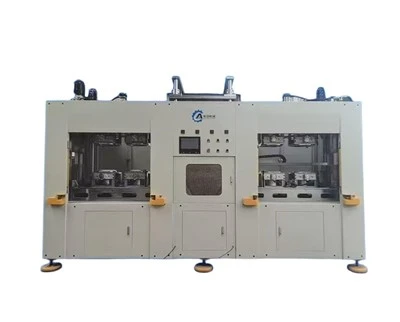
Can a Vibration Welding System be automated?
Hey there! I'm a supplier of Vibration Welding System, and today I want to dig into a super interesting topic: Can a vibration welding system be automated?
Let's start by understanding what a vibration welding system is. It's a technology used to join thermoplastic parts together. The basic principle is that it creates friction between the parts by vibrating them. This friction generates heat, which then melts the plastic surfaces, and when they cool down, they form a strong bond. It's widely used in industries like automotive, electronics, and medical devices because it can produce high - quality, reliable welds.
Now, the big question: automation. In today's fast - paced manufacturing world, automation is the name of the game. Everyone wants to increase efficiency, reduce costs, and improve quality control. And the good news is, yes, a vibration welding system can absolutely be automated.
One of the main advantages of automating a vibration welding system is increased efficiency. Manual welding can be time - consuming, especially when dealing with high - volume production. An automated system can work non - stop, 24/7 if needed. It can perform welds at a consistent speed, which means you can churn out a large number of welded parts in a shorter period. For example, in an automotive manufacturing plant, they need to produce thousands of plastic components every day. An automated Vibration Plastic Welder can handle this high - volume demand much better than a manual operator.
Another benefit is improved quality control. When you automate a vibration welding system, you can precisely control all the parameters of the welding process. The system can be programmed to apply the exact amount of pressure, vibration frequency, and welding time. This means that every single weld is consistent, with the same strength and quality. In contrast, manual welding is subject to human error. An operator might get tired or distracted, which could result in inconsistent welds. In industries like medical devices, where the quality and reliability of the product are crucial, an automated system can ensure that every welded part meets the strictest standards.
Automation also helps in reducing labor costs. Hiring and training manual operators can be expensive, and there are also associated costs like benefits and overtime. With an automated vibration welding system, you only need a few technicians to monitor the system. These technicians can be trained to handle any maintenance or troubleshooting tasks, but the actual welding process is done by the machine. This can lead to significant cost savings in the long run.
But how does the automation process work? Well, there are different levels of automation. At the most basic level, you can have a semi - automated system. In a semi - automated Vibration Welding System, the operator still has to load and unload the parts, but the welding process itself is controlled by the machine. This is a good option for small to medium - sized production runs or when the parts are complex and need some human intervention for proper positioning.
For full automation, you can integrate the vibration welding system with a robotic arm. The robotic arm can pick up the parts from a conveyor belt, place them in the welding fixture, and then remove the welded parts after the process is complete. This type of system is ideal for high - volume production, as it can work continuously and with high precision. You can also integrate the system with other manufacturing processes, such as injection molding or assembly lines. This creates a seamless production flow, where parts are manufactured, welded, and assembled all in one go.


There are also some advanced features that can be added to an automated vibration welding system. For example, some systems come with sensors that can detect the quality of the weld in real - time. If a weld doesn't meet the specified criteria, the system can automatically stop and alert the technician. This helps in preventing the production of defective parts and reduces waste.
However, it's not all sunshine and rainbows when it comes to automating a vibration welding system. There are some challenges that you might face. One of the biggest challenges is the initial investment. An automated system can be quite expensive, especially if you're going for a fully integrated setup with robotic arms and advanced sensors. You need to carefully evaluate your production volume and long - term goals to determine if the investment is worth it.
Another challenge is the complexity of programming and maintenance. An automated system requires skilled technicians who can program the machine and perform regular maintenance. If you don't have a team of trained technicians, you might need to invest in training or hire external experts. This can add to the overall cost of the automation project.
Despite these challenges, the benefits of automating a vibration welding system far outweigh the drawbacks. As technology continues to advance, the cost of automation is likely to come down, and the systems will become even more user - friendly.
If you're in the market for a Hybrid Vibration Welder or any other type of vibration welding system, and you're considering automation, I'd be more than happy to have a chat with you. We can discuss your specific needs, production volume, and budget, and come up with the best solution for your business. Whether you're a small - scale manufacturer looking to increase efficiency or a large corporation aiming for high - quality mass production, we've got the expertise and the products to help you achieve your goals. So, don't hesitate to reach out and start the conversation about how an automated vibration welding system can transform your manufacturing process.
References
- "Plastic Welding Handbook" - A comprehensive guide on different plastic welding techniques, including vibration welding.
- Industry reports on the latest trends in manufacturing automation, which often cover the automation of welding processes.