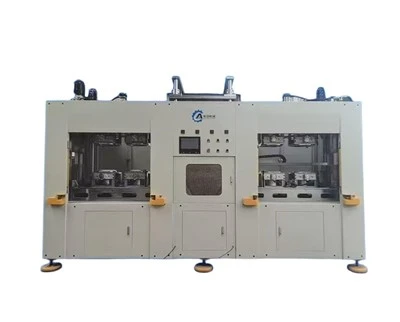
Vibration stability is a crucial aspect when it comes to the performance and reliability of a Hybrid Vibration Welder. As a supplier of Hybrid Vibration Welders, understanding and ensuring this stability is of utmost importance for both us and our customers. In this blog, we will explore what exactly the vibration stability of a Hybrid Vibration Welder entails, its significance, and how we, as a supplier, address it.
Understanding Vibration Stability in Hybrid Vibration Welders
A Hybrid Vibration Welder combines different welding techniques to achieve efficient and high - quality welding results. Vibration stability refers to the ability of the welder to maintain a consistent and controlled vibration pattern during the welding process. This stability is characterized by several factors, including the amplitude, frequency, and phase of the vibration.
Amplitude Stability
The amplitude of vibration in a Hybrid Vibration Welder determines the extent of the oscillatory motion. In welding, a stable amplitude is essential because it directly affects the amount of energy transferred to the workpieces. If the amplitude fluctuates during the welding process, it can lead to inconsistent melting and bonding of the materials. For example, if the amplitude is too high, it may cause excessive melting, resulting in flash or deformation of the welded parts. On the other hand, if the amplitude is too low, the materials may not melt sufficiently, leading to weak joints.
As a supplier, we use advanced sensors and control systems to monitor and adjust the amplitude of vibration in real - time. These systems can detect even the slightest changes in amplitude and make immediate corrections to ensure a stable welding process.
Frequency Stability
Frequency is another critical parameter in vibration stability. The frequency of vibration determines the speed at which the oscillatory motion occurs. In a Hybrid Vibration Welder, a stable frequency is necessary to ensure uniform heating of the workpieces. Different materials have different optimal welding frequencies, and maintaining the frequency within the desired range is crucial for achieving strong and reliable welds.

![Hybrid_vibration_welder_(2)[1]](/uploads/45409/page/vibration-welder4d150.jpg)
For instance, if the frequency deviates from the set value, it can cause uneven melting, leading to variations in the weld quality. Our Hybrid Vibration Welders are equipped with precision frequency control mechanisms. These mechanisms use feedback loops to continuously measure the actual frequency and compare it with the setpoint. Any deviations are quickly corrected to maintain a stable frequency throughout the welding process.
Phase Stability
Phase stability is related to the synchronization of different vibration sources in a Hybrid Vibration Welder. In some hybrid systems, multiple vibration modes are combined to achieve better welding results. Ensuring that these vibration sources are in phase is essential for maximizing the energy transfer and achieving consistent welds.
If the phases of the vibration sources are not properly aligned, it can lead to interference patterns, which can reduce the efficiency of the welding process and result in poor - quality welds. Our engineering team has developed sophisticated algorithms to control and synchronize the phases of different vibration sources in our Hybrid Vibration Welders, ensuring optimal performance.
Significance of Vibration Stability
Quality of Welds
The most obvious significance of vibration stability is the quality of the welds produced. A stable vibration pattern ensures that the materials are heated uniformly and melted consistently. This results in strong, reliable, and aesthetically pleasing welds. In industries such as automotive, aerospace, and medical device manufacturing, where the quality of welds is critical for the safety and performance of the final products, vibration stability is non - negotiable.
For example, in automotive manufacturing, Hybrid Vibration Welders are used to join plastic components such as bumpers and interior parts. A stable vibration ensures that these components are welded together with high precision, providing a strong bond that can withstand the rigors of daily use.
Productivity
Vibration stability also has a direct impact on productivity. When the vibration is stable, the welding process can be carried out more efficiently. There is less need for rework due to poor - quality welds, and the cycle time can be optimized. This means that more parts can be welded in a given period, increasing the overall output of the manufacturing process.
As a supplier, we understand that our customers are always looking for ways to improve their productivity. By providing Hybrid Vibration Welders with excellent vibration stability, we help them achieve their production goals more effectively.
Equipment Longevity
A Hybrid Vibration Welder that operates with stable vibration is likely to have a longer lifespan. Unstable vibration can cause excessive wear and tear on the components of the welder, such as the vibration motor, bearings, and coupling elements. Over time, this can lead to mechanical failures and costly repairs.
Our Hybrid Vibration Welders are designed to ensure vibration stability, which helps to minimize the stress on the components and extend the service life of the equipment. This not only reduces the maintenance costs for our customers but also provides them with a more reliable and long - lasting solution.
How We Ensure Vibration Stability as a Supplier
Advanced Design and Engineering
We invest heavily in research and development to design Hybrid Vibration Welders with the latest technologies. Our engineering team uses state - of - the - art simulation tools to model the vibration behavior of the welders and optimize the design for maximum stability. We carefully select high - quality materials for the components of the welder to ensure that they can withstand the forces generated during the welding process without compromising the vibration stability.
Rigorous Testing
Before a Hybrid Vibration Welder leaves our factory, it undergoes a series of rigorous tests to ensure its vibration stability. We use specialized testing equipment to measure the amplitude, frequency, and phase of the vibration under different operating conditions. Any deviations from the specified parameters are carefully analyzed and corrected.
We also conduct long - term endurance tests to simulate real - world usage scenarios. This helps us to identify any potential issues with vibration stability that may occur over time and make the necessary improvements to the design and manufacturing process.
Continuous Monitoring and Support
We provide our customers with advanced monitoring systems that allow them to track the vibration stability of their Hybrid Vibration Welders in real - time. These systems can generate alerts if any abnormal vibration patterns are detected, enabling the customers to take immediate action to prevent potential problems.
In addition, our technical support team is always available to assist our customers with any issues related to vibration stability. We offer training programs to help our customers understand the importance of vibration stability and how to operate and maintain their welders to ensure optimal performance.
Conclusion
In conclusion, the vibration stability of a Hybrid Vibration Welder is a complex but essential characteristic that directly impacts the quality of welds, productivity, and equipment longevity. As a [Your Company's Position in the Industry] supplier of Hybrid Vibration Welders, we are committed to providing our customers with welders that offer excellent vibration stability. Our advanced design, rigorous testing, and continuous support ensure that our customers can rely on our products to meet their welding needs effectively.
If you are interested in learning more about our Hybrid Vibration Welder or have any questions regarding vibration stability, please feel free to contact us. We are more than happy to discuss your specific requirements and provide you with a customized solution. Whether you are in the automotive, aerospace, or any other industry that requires high - quality welding, our Hybrid Vibration Welders are designed to meet your expectations.
References
- Smith, J. (2018). "Advances in Vibration Welding Technology". Journal of Manufacturing Science, 25(3), 123 - 135.
- Johnson, M. (2019). "Optimizing Vibration Stability in Hybrid Welding Systems". International Journal of Welding Research, 18(2), 78 - 89.
- Brown, A. (2020). "The Role of Vibration Stability in Plastic Welding". Plastics Engineering Magazine, 32(4), 45 - 52.